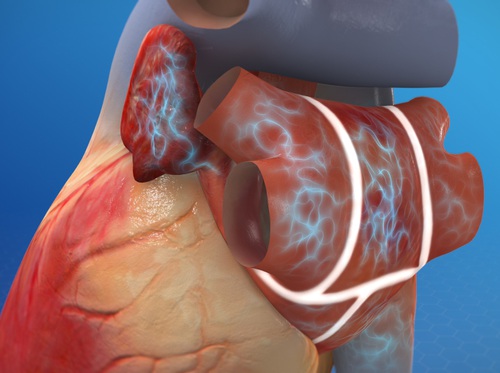
If your heart beats too fast, too slow, or irregularly, you have an arrhythmia. It's a problem with the rhythm of your heart. For many people, an arrhythmia is harmless. But for some, it can be life-threatening.
This is a test of your heart. It lets your doctor see how well your heart is working. A doctor can use this test to find out if you have a heart problem, or to monitor a heart problem your doctor already knows you have.
Your heart beats all day long, but you usually don't notice it. Sometimes, though, your heart may beat in a way that seems different. It may flutter or race, or you may feel or hear your heart beat. These abnormal rhythms are called "heart palpitations." Let's take a moment to learn more.
This is a problem with the rhythm of your heart. We call it "A-fib." With it, your heart beats much faster than normal. And, the upper and lower chambers of your heart don't work together like they should. For some, A-fib goes away on its own. But for others, it's a long-term problem.
This procedure places a tiny implant in your heart to stop blood clots from forming. It's helpful if you have a condition called "atrial fibrillation," which raises your risk for clot formation and stroke.
This procedure corrects an irregular heartbeat. During the procedure, the doctor creates a pattern of scars on your heart. These scars block the electrical signals that cause your heart to beat irregularly.